About us
Section Common Infrastructures coordinates cooperation between NFDI consortia and other stakeholders in the development of federated infrastructures and software components. As the central point of contact for the development of basic services, it aims to identify and design infrastructure components that can be used jointly and to ensure their interoperability. A particular focus is the development of a Research Data Commons (RDC) – a shared resource for research data. In addition, the section aims to establish sustainable technology partnerships within the NFDI in order to organize the provision of shared information infrastructures in the long term. The section is also involved in various national and international initiatives, standardization projects, and networks such as ESFRI, FAIR Data Spaces (GAIA-X), the Research Data Alliance (RDA), and the European Open Science Cloud (EOSC).
Goals
Section Common Infrastructures aims to enable the coordinated and sustainable development of basic services within NFDI. This includes the identification, design, and development of jointly usable infrastructure components and their interoperability.
A key project is the establishment of a Research Data Commons (RDC), which will serve as a shared resource for research data. In addition, an architectural concept supported by all consortia is to be developed in order to identify deficits and overlaps and achieve better alignment and division of labor. The section also aims to establish sustainable structures for technology partnerships within NFDI in order to organize the provision of shared information infrastructures in the long term. In addition, the organizational structure and communication with the working groups, other sections, and consortia are to be improved.
Working Groups
Schalter (ausgeblendet)
Schalter, damit darauffolgendes Element ausklappbar ist.
Overall Architecture (OA)
The Overall Architecture working group aims to create a binding and practical framework for the technical and organizational development of the NFDI. A continuous, collaborative, and iterative architecture process is intended to lay the foundations for an integrated, interoperable, and scalable infrastructure. In addition to technical and functional aspects, the working group also considers operational and organizational conditions to enable the provision, operation, and sustainable integration of services in demand across consortia. In doing so, it makes a key contribution to national and international networking within the NFDI.
Contact persons: Marius Politze; Philipp Wieder
Link to Charta: https://zenodo.org/records/15210894
Data Integration (DI)
The immense heterogeneity of scientific data and the associated problems in combining data often prevent the derivation of new insights, especially in the context of interdisciplinary projects. The goal of this working group is therefore to develop and provide scalable methods for integrating data and metadata in order to enable easy data exchange between users and services. In particular, physical and virtual integration methods, methods for schema matching and semantic annotation, and knowledge graphs are considered. In addition, an architecture for the integration of scientific data is being developed on the basis of concrete user stories, and an initial reference implementation is being provided.
Contact persons: Bernhard Seeger, Andreas Henrich, Thorsten Papenbrock, Dirk Riehle
Link to Charta: https://zenodo.org/records/6519590
Data Management Planning (DMP)
The working group aims to coordinate the DMP activities of the NFDI consortia. In addition to establishing DMP tools, agreeing on their coordinated further development, and harmonizing the content of DMP templates, it also develops concepts for the strategic implementation of DMPs in research workflows, training, and consulting services. Since DMPs form essential connecting or intermediate elements of the data management workflow and cover almost its entire content, the working group strives for partial cooperation with other NFDI sections, such as the Edutrain section and the Metadata section.
Contact persons: Daniela Hausen; Jürgen Windeck
Link zur Charta: https://zenodo.org/records/7540682
Data Science and Artificial Intelligence (DSAI)
The various NFDI consortia are developing tools and services based on innovative methods, such as the use of LLMs. The working group serves as a forum for exchanging ideas about these tools and services and raising awareness of them within the NFDI and beyond. By establishing these tools and services, the working group aims in particular to contribute to greater acceptance of the infrastructures provided by the NFDI consortia within the community.
Contact persons: Adamantios Koumpis, Arnim Bleier, Sonja Schimmler
Link to Charta: https://zenodo.org/records/6498197
Electronic Lab Notebooks (ELN)
The working group comprises representatives from various NFDI consortia, with a focus on the natural sciences and life sciences. Its goal is to prepare and establish services that support the selection of suitable ELN software and its introduction in the consortia, their communities, and individual groups. The working group will deal with the systematic evaluation of various ELNs and their data structures. Furthermore, a platform for testing various ELN software and similar (embedded) tools will be set up to provide permanent access to the relevant solutions and enable comparative analysis.
Contact persons: Nicole Jung, Christof Wöll, Felix Bach
Link to Charta: https://zenodo.org/records/6510247
Identity and Access Management (IAM)
The working group aims to establish processes, guidelines, and architectures to enable and facilitate the management of digital identities and federated access to resources within and between NFDI consortia. To this end, it is necessary to connect and expand existing and emerging IAM systems in such a way that researchers from different fields and institutions can access NFDI resources as easily as possible, yet securely. Interoperability is a key requirement, not only within the NFDI, but also in terms of access to and exchange with external infrastructures such as the European Open Science Cloud or the Lifesciences AAI.
Contact persons: Marius Politze, Wolfgang Pempe
Link to Charta: https://zenodo.org/records/6421866
Infrastructure and Data Security (IDS)
Scientific disciplines deal with the proper processing of personal data covered by the EU General Data Protection Regulation (GDPR) or other sensitive types of data that require technical and organizational measures to ensure a high level of data security. This Infrastructure and Data Security (IDS) working group in the NFDI Common Infrastructures section deals with the necessary technical and organizational precautions that must be implemented in the research infrastructure to ensure the secure and lawful processing and management of personal and sensitive data.
Contact person: Petra Ritter
Long-term Access and Preservation (LTA)
The working group aims to identify, coordinate, and make available to the NFDI standards, recommendations, procedures, and techniques that can be used to secure, preserve, and utilize data and software as bit streams and, beyond that, as reproducible information objects in the long term. It is composed of members from various NFDI consortia in the humanities, natural sciences, and engineering disciplines, as well as experts from various relevant infrastructures, all of whom have strong ties to the nestor long-term archiving competence network. The close integration of the NFDI consortia with experienced partners in the field of long-term archiving ensures that, on the one hand, the relevant state-of-the-art expertise is available within the group and, on the other hand, the knowledge of data producers about the contexts in which the data was created and data users can interact directly.
Contact persons: Svenia Pohlkamp, Tobias Steinke, Katharina Markus, Thomas Stäcker
Link to Charta: 10.5281/zenodo.6451455
Publications:
Markus, K., Naumann, K., Schmalzl, M., Watson, J., & Triebel, D. (2024). Long-term Archiving in the NFDI. Zenodo. https://doi.org/10.5281/zenodo.11109480
Gernan: Markus, K., Naumann, K., Schmalzl, M., Watson, J., & Triebel, D. (2024). Langzeitarchivierung in der NFDI. Zenodo. https://doi.org/10.5281/zenodo.10822613
Multi-Cloud (MC)
A key objective of all NFDI consortia is to systematically register data and make it available in a sustainable manner so that open and uniform access is possible at the national and even international level. The basis for such a comprehensive shared infrastructure is the concept of a federated multi-cloud architecture, which provides uniform access to computing and data storage resources via a federated identity and access management (IAM) infrastructure and enables the seamless integration of distributed heterogeneous services and data at a higher level.
Contact person: Alexander Sczyrba
Link to Charta: https://zenodo.org/records/6510971
Research Software Engineering (RSE)
The working group connects the NFDI specialist consortia and basic services in software-related aspects. It focuses on three key areas: research software, software communities, and software infrastructure (e.g., basic services) at NFDI. Software metadata is handled by the “Research Software Metadata” working group in the Metadata section. In an advisory and supportive role, the working group operates a central forum and establishes the necessary software ecosystem within NFDI for the professional development of software infrastructure components, which together form an integral part of NFDI. In addition, the working group serves as an interface for NFDI with comparable European and international initiatives in order to promote the connectivity of NFDI with other infrastructures.
Contact persons: Florian Thiery, Bernd Flemisch
Link to Charta: https://zenodo.org/records/6483449
Persistent Identifiers (PID)
The aim is to develop a strategy for the implementation and expansion of community-based and established PID services that is closely aligned with the needs of the NFDI consortia. This includes necessary technical and organizational measures as well as information and training aspects, particularly with regard to standardized and complete metadata that ensures compliance with the FAIR principles. In order to enable direct exchange with PID4NFDI on user-oriented PID service development for the NFDI consortia, the working group format is used as an open hour with PID4NFDI.
Contact persons: Sven Bingert, Stephanie Hagemann-Wilholt
Link to Charta: https://zenodo.org/records/14961772
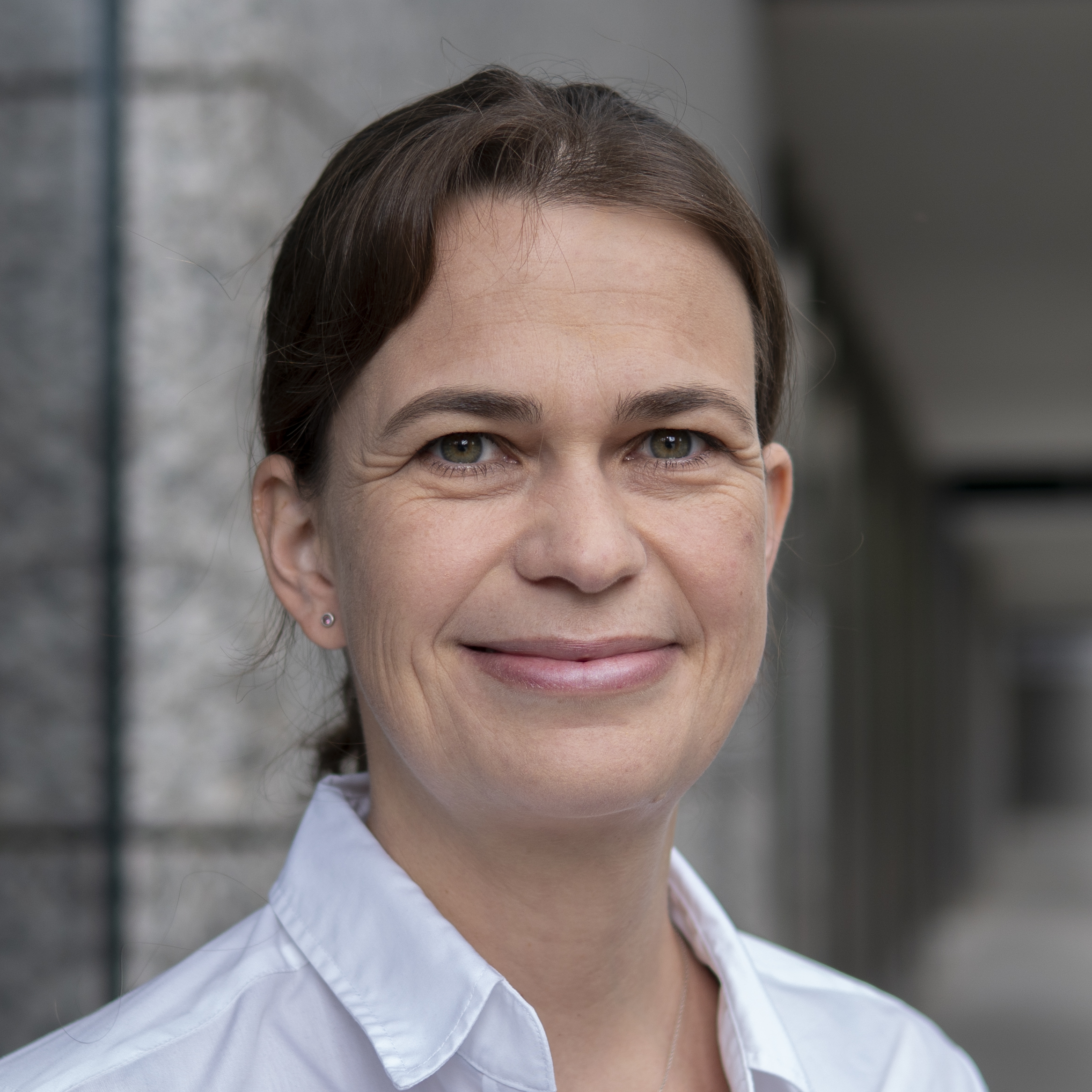
Speaker: Prof. Dr. Sonja Schimmler
(Fraunhofer-Gesellschaft zur Förderung der angewandten Forschung e.V./ TU Berlin)
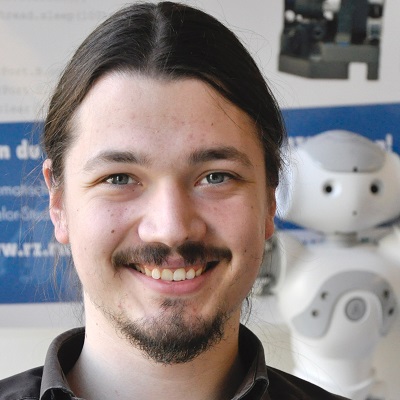
Deputy Spokesperson: Dr. Marius Politze
(RWTH Aachen)