Cross-Disciplinary Collaboration for Preserving Cultural Heritage
Every day, research institutions, museums, libraries, archives, and theatres generate new data in the humanities and cultural sciences. These data range from sensor-based surveys of archaeological sites and digital representations of musical scores to lead isotope analyses, 3D models of cultural heritage monuments, recordings of stage performances, and archival records from administration and society, including electronic records and social media. They also include digitized historical manuscripts and charters, text corpora, digital texts, as well as lexical and linguistic resources.
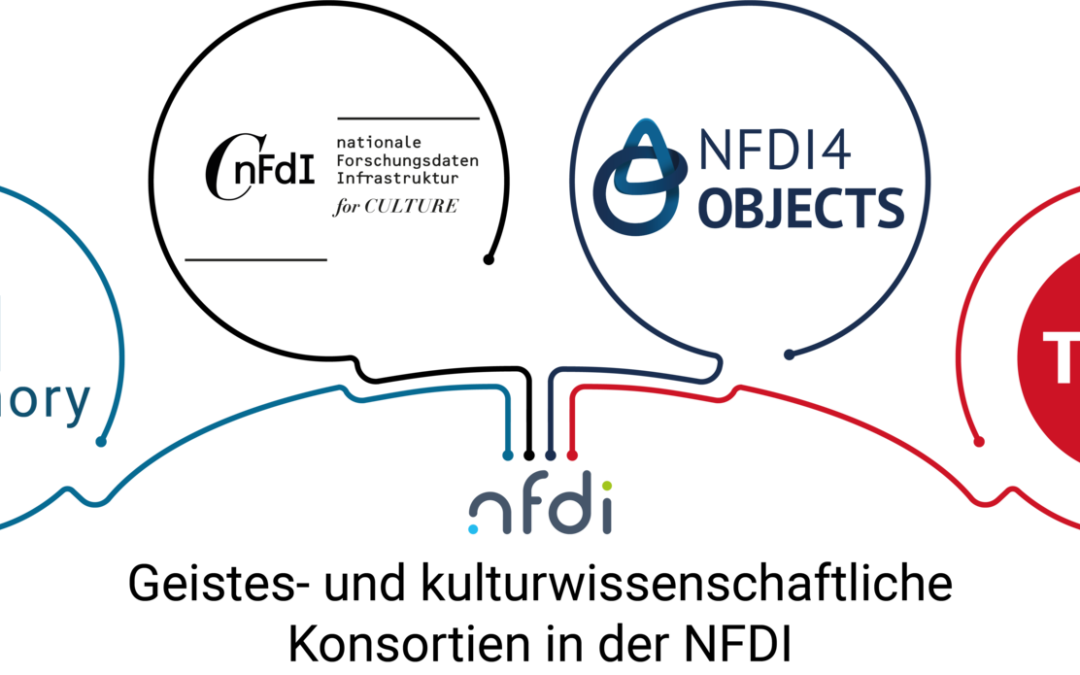
To ensure the quality and long-term availability of these diverse data types, the consortia NFDI4Culture, NFDI4Memory, NFDI4Objects, and Text+ joined forces as Humanities@NFDI. Building on a series of workshops that began in 2018, the four consortia formalized their collaboration through a Memorandum of Understanding in 2020.
From Standards to Workshops: Synergies in Practice
Interdisciplinary research often faces challenges related to comparability and interoperability. To make data findable, accessible, interoperable, and reusable across disciplines, both metadata standards and reference systems must be aligned. One example is the working group dedicated to developing a shared ontology for the humanities.
Further collaborative initiatives include the joint registry for historical and object-related vocabularies (R:hovono), the Minimum Dataset Working Group, contributions to the German Research Foundation’s practical guidelines on digitization, and the social media series Show & Tell. These activities not only help establish common standards but also foster knowledge exchange, strengthen community networks, and contribute to a broader cultural shift toward sustainable and collaborative research data management.
Other posts
Posts
Enabling DMP services for the agrosystems research community: DMP4NFDI in FAIRagro
FAIRagro DMP Service Strengthens Research Data Management in Agricultural Systems Research
In collaboration with DMP4NFDI, FAIRagro has established a comprehensive service for data management plans (DMPs) tailored to agricultural systems research. Built on the open-source Research Data Management Organiser (RDMO), the service provides a discipline-specific DMP template with detailed guidance, predefined answer options, and direct access to the FAIRagro Helpdesk. It helps researchers meet funder requirements, promotes good research practice, and improves the findability, accessibility, and reusability of research data in line with the FAIR principles. Developed through a series of joint incubator projects with DMP4NFDI, the service continues to evolve, including the future integration of controlled vocabularies in collaboration with TS4NFDI.
QualidataNet by KonsortSWD-NFDI4Society is the “central point of entry” for qualitative data and its secondary use.
QualidataNet – Making Qualitative Research Data Visible and Reusable
QualidataNet is the central access point for the reuse, archiving, and research data management of qualitative research data. Its search portal improves the visibility and discoverability of qualitative datasets from different providers. Through practical guidance, tools such as the open-source anonymization tool QualiAnon, and contributions to international metadata standards, QualidataNet supports researchers, educators, and institutions working with qualitative data. At the same time, the network fosters collaboration, exchange, and a stronger culture of qualitative data reuse across the community.
Forum4MICA – Making Information Commonly Available (KonsortSWD I NFDI4Society)
Forum4MICA – Making Research Data Knowledge Accessible Together
Forum4MICA connects researchers and research data centers on one central platform. It provides a space to ask questions, exchange expertise, and discuss complex datasets from the social, behavioral, educational, and economic sciences. Through direct interaction with experts and the research community, the platform is building a sustainable knowledge archive for research data management and scientific collaboration.

Recent Comments