(Published on 26.09.2023) Around 700 participants attended the first edition of the Conference on Research Data Infrastructure (CoRDI) at the Campus South of the Karlsruhe Institute of Technology (KIT) from 12 to 14 September. We have summarized five highlights of the conference.
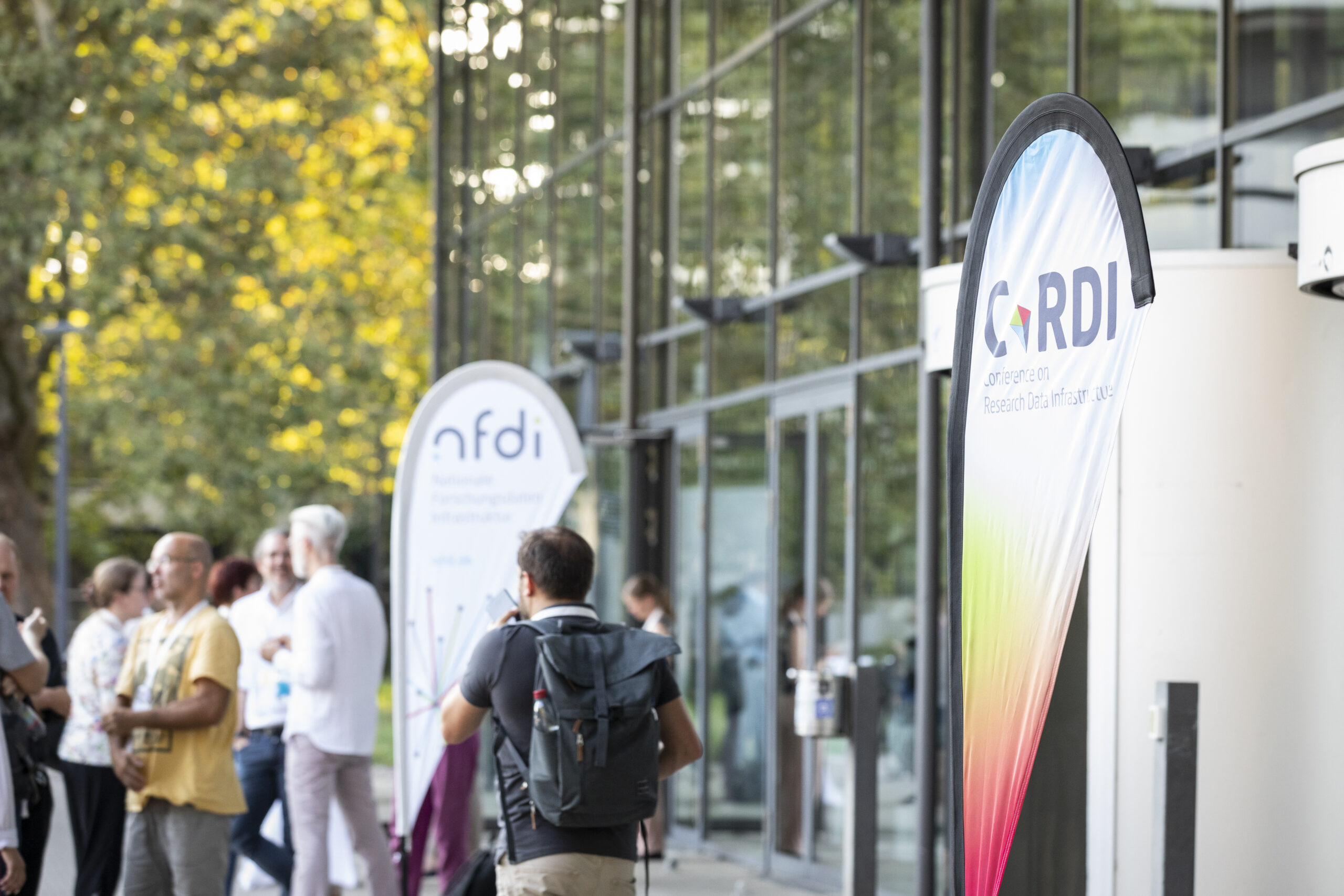
1. high number of participants, low no-show rate: A total of 681 people attended the CoRDI during the three days of the conference. 761 people had registered, which means that the no-show rate was 10.5 percent. The conference was fully booked.
10 percent of the registered participants had traveled from abroad. The longest distance, more than 9,000 kilometers, was traveled by a participant from Japan to be present on site.
2. 84 presentations from a wide range of disciplines: The CoRDI had four Community Tracks (Humanities & Social Sciences, Natural Sciences, Life Sciences, Engineering Sciences) and six Thematic Tracks (Enabling RDM, Harmonizing RDM, Securing RDM, Spreading RDM, Linking RDM, Connecting RDM). A wide range of offerings with up to four tracks running in parallel provided choice. A total of 84 presentations were held. In the CoRDI-Zzenodo Community are slides of many presentations. The Extended Abstracts for the presentations were published in Proceedings of CoRDI.
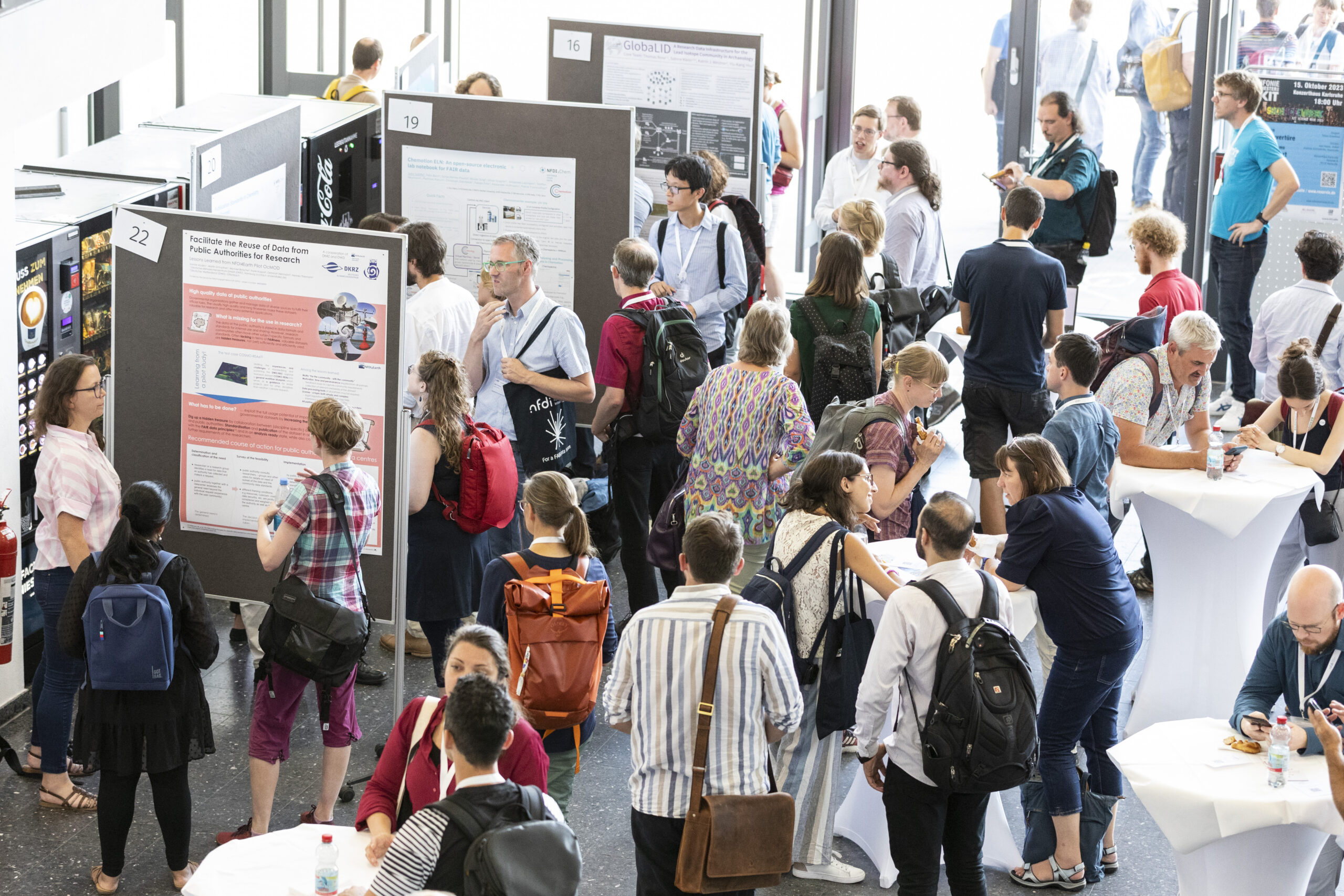
3. Two Poster Sessions and a Market of Consortia: The participants of the conference had to possibility to see 105 posters in two different sessions. Many postes can be found in the CoRDI zenodo Community. The Extended Abstracts for Posters that were submitted via the Call for Papers are part of the Proceedings of CoRDI.
The Market of Consortia offered a similar format, with 30 booths providing information about the activities of the consortia. The European Open Science Cloud (EOSC), the German Research Foundation (DFG), the German Council for Scientific Information Infrastructures (RfII) and the European Life Science Infrastructure for Biological Information (ELIXIR) were also involved.
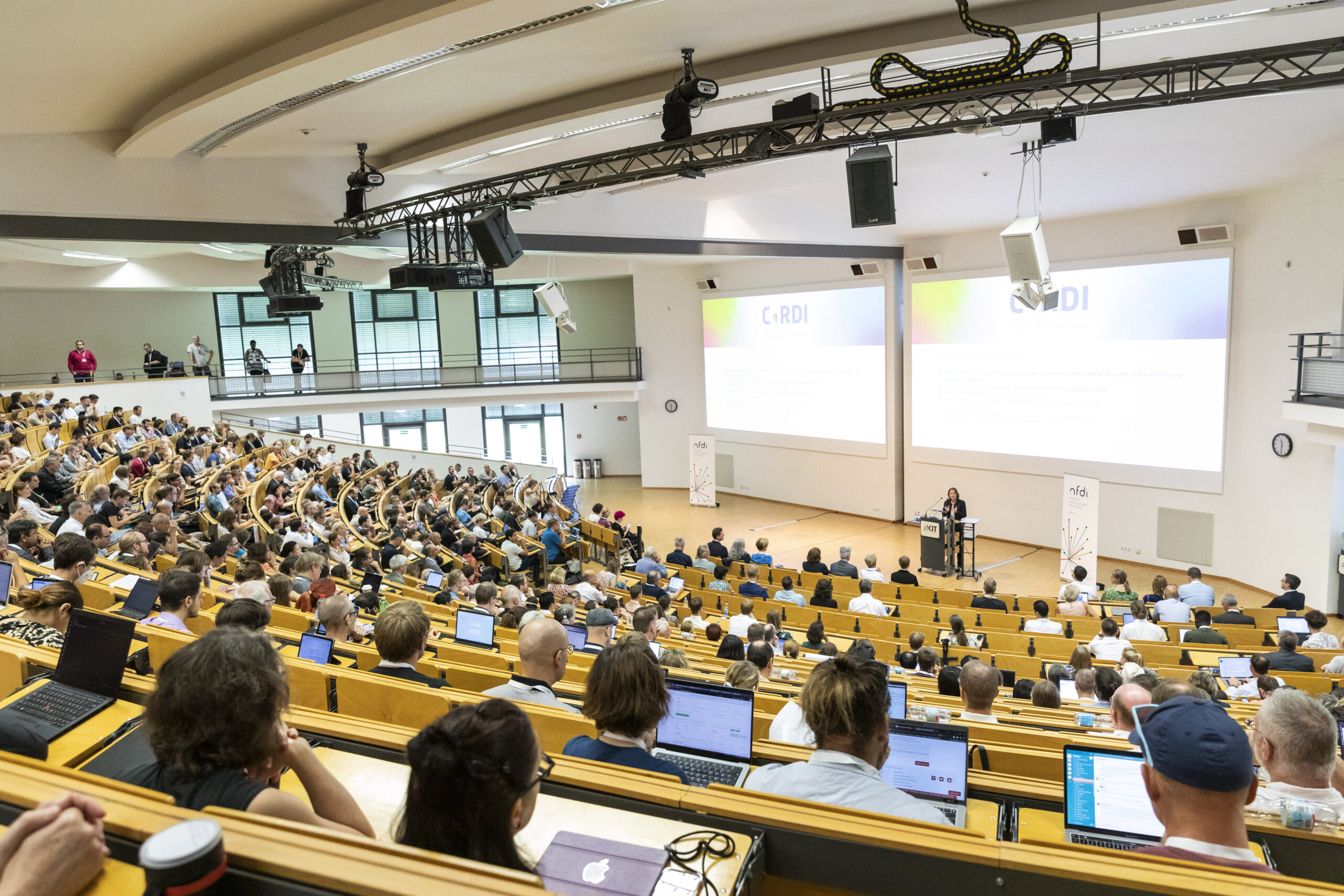
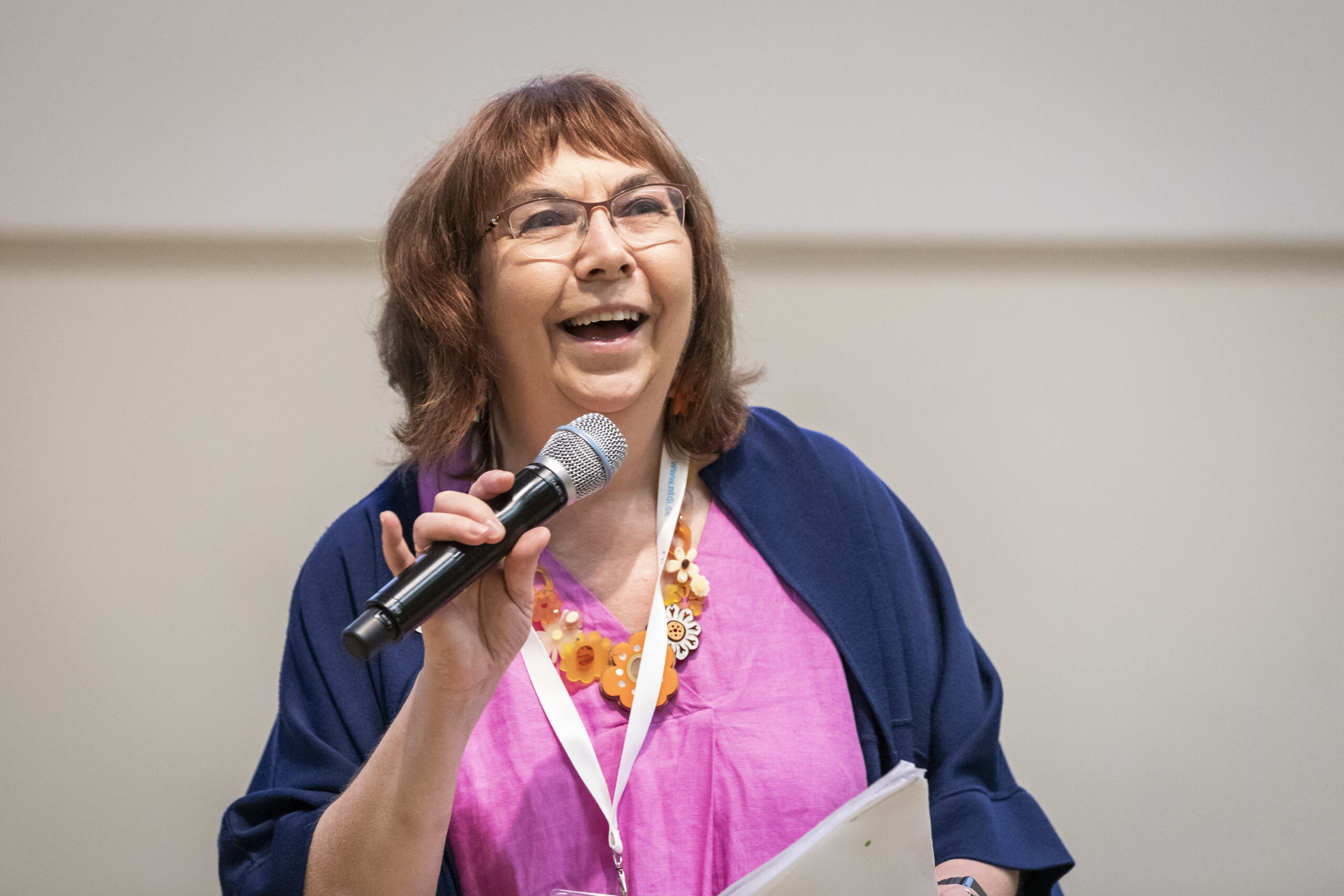
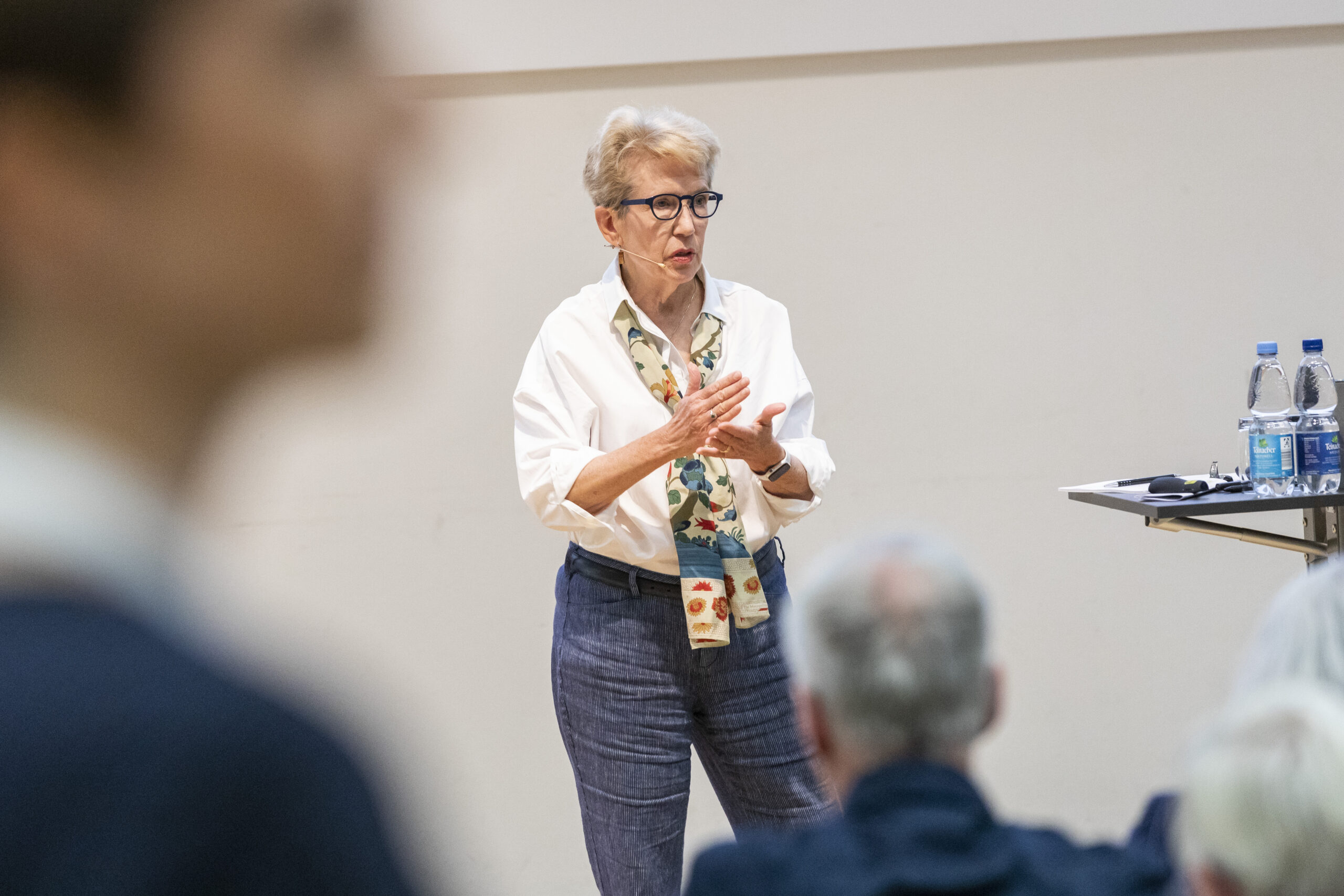
4. Three exciting keynotes: In the largest lecture hall of KIT, the Audimax, the participants had the opportunity to listen to three different keynotes. Christine Borgman, professor at the University of California, addressed in her keynote the opportunities as well as problems in developing global research infrastructures and argued for a broader focus on knowledge infrastructures, that is, robust networks of people, artifacts, and institutions for the production, exchange, and preservation of knowledge. Mark Wilkinson, who was influential in coining the term “FAIR principles,” spoke in his keynote about what steps need to be fulfilled to get closer to the goal of increasing data reusability.
The public evening lecture of Julia Janssen, a Dutch artist, focused on how much data can flow from the user to hundreds of companies with just one click and what the situation is with regard to data protection in a digital society.
The videos of the keynotes will be published on Youtube: https://www.youtube.com/@nfdi
5. Side programme: On Wednesday, an extensive evening program was offered. The participants could choose between an excursion to the Campus North of the KIT, a conference dinner and a visit to the Schlosslichtspiele in the city of Karlsruhe. All activities focused on the common exchange and the motto “Connecting Communities”.
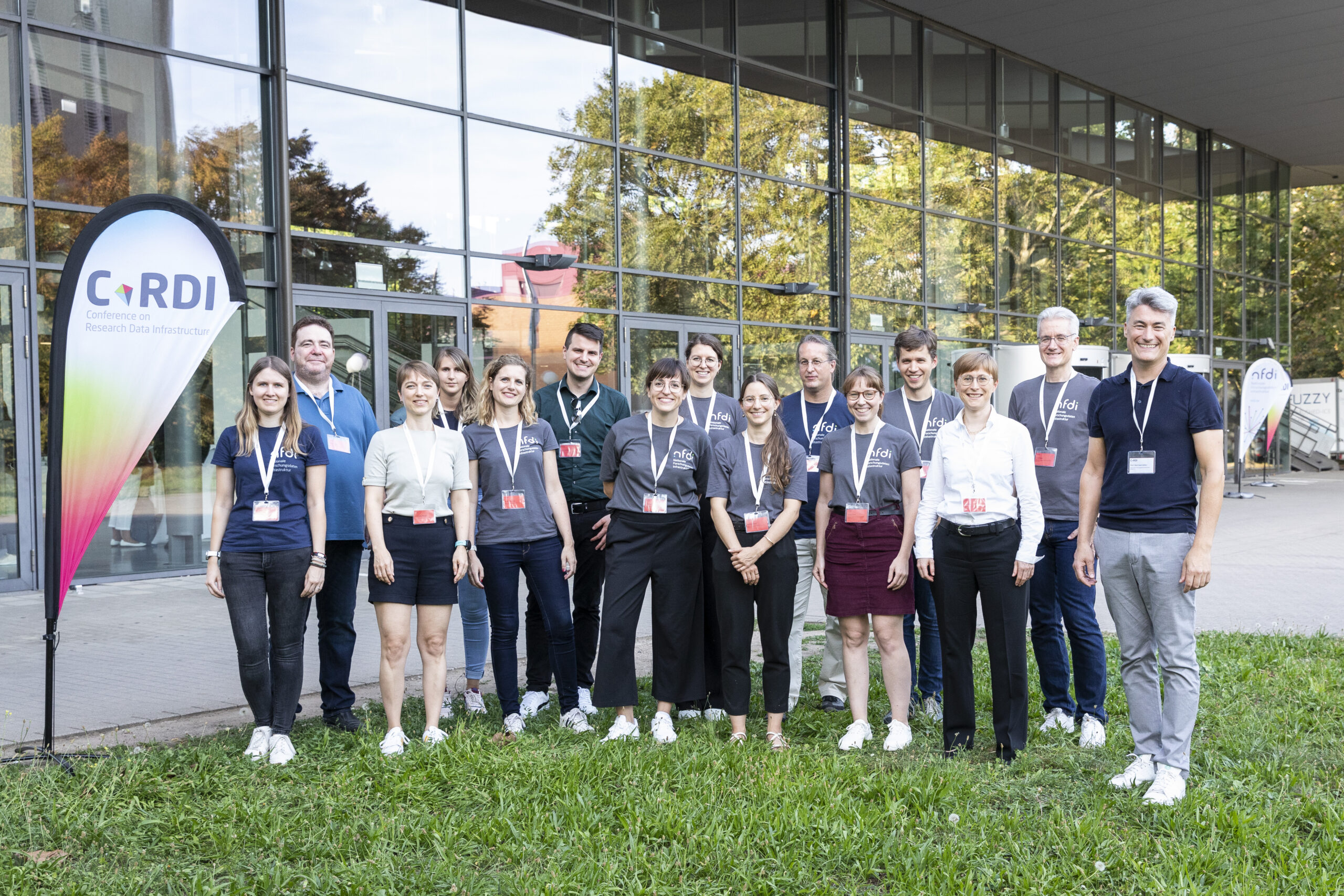
Conclusion: We are pleased that the first CoRDI was a complete success thanks to a lively participation. We are overwhelmed by the demand and glad that the motto “Connecting Communities” has become a reality.
The next edition will take place in 2025. A different format for exchange is planned for next year: The event in Berlin will focus on “EOSC meets NFDI”.
Other posts
Posts
Save the date: CoRDI 2027 – see you in Hannover!
The 3rd edition of the Conference on Research Data Infrastructure (CoRDI) will take place from 5 to 7 October 2027 at Leibniz University Hannover (LUH). CoRDI 2027 is being organised by the association German National Research Data Infrastructure (NFDI) in cooperation with the TIB – Leibniz Information Centre for Science and Technology and LUH.
Minister Petra Olschowski visits the NFDI
How does NFDI contribute to ensuring that research data can be used sustainably, thereby facilitating new insights and innovations? These and other questions were the focus of the visit by Petra Olschowski, Minister for Science, Research and the Arts of the State of Baden-Württemberg, to the office of the NFDI association in Karlsruhe on 18 August.
GWK Approves Continued Federal and State Funding for NFDI Starting in 2029
At its meeting on July 10, the Joint Science Conference (GWK) adopted a new federal-state agreement (BLV) for the German National Research Data Infrastructure (NFDI). This agreement defines the funding and future structure of NFDI starting in 2029. The federal and state governments intend to continue funding NFDI with up to 98.7 million euros per year from 2029 to 2038.

Recent Comments